

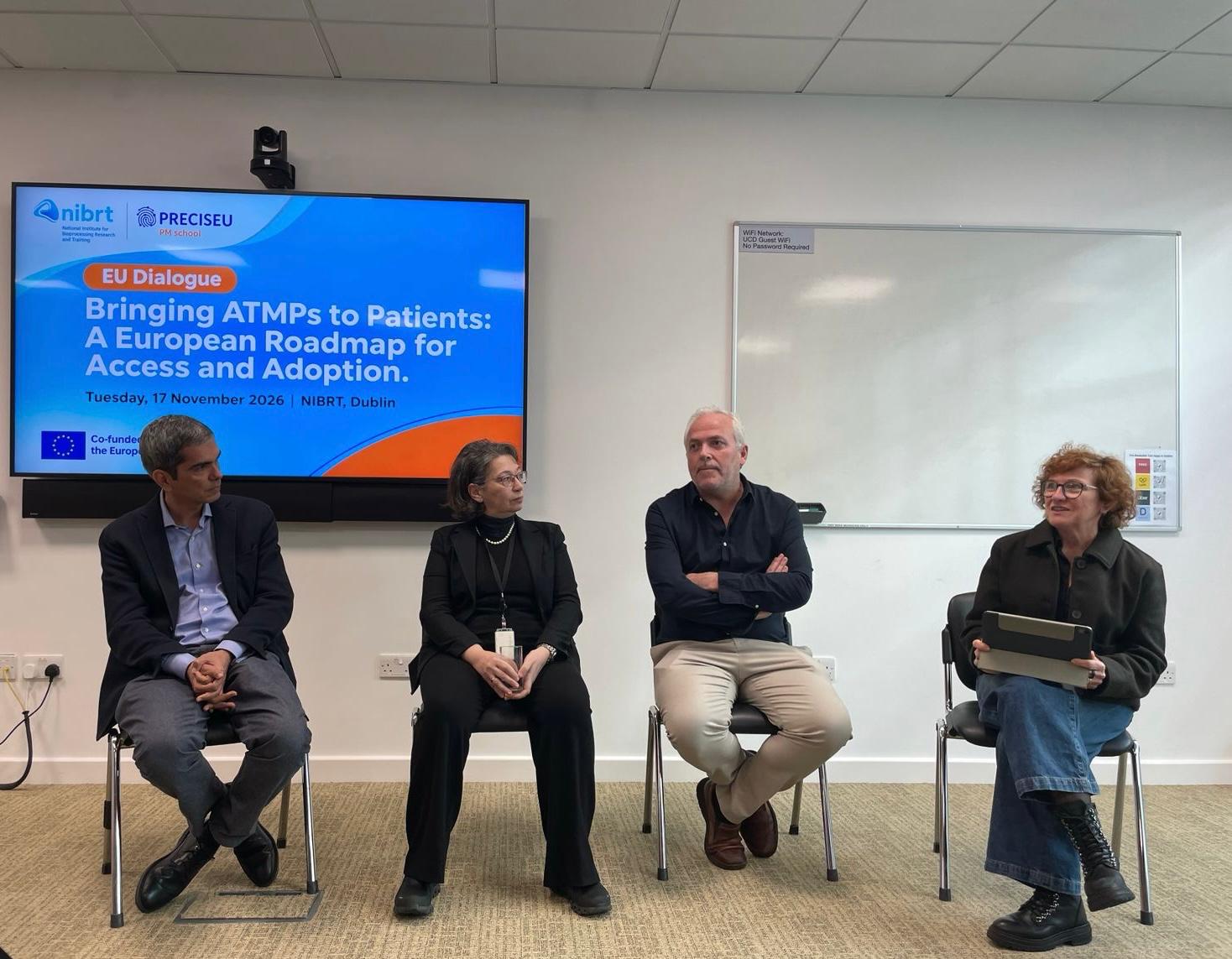
EU Policy Dialogue in Dublin highlights the need for a coordinated European ATMP roadmap, stronger clinical and manufacturing networks, improved use of health data and fewer barriers between innovation and patient access.
Dublin, 17 November 2026 – How can Europe turn its strong scientific and technological capabilities in advanced therapies into treatments that reach patients faster and more equitably?
This question was at the centre of the PRECISEU EU Policy Dialogue “Bringing ATMPs to Patients: A European Roadmap for Access and Adoption”, held at the National Institute for Bioprocessing Research and Training (NIBRT) in Dublin during the 4th PRECISEU Personalised Medicine School.
The dialogue brought together European policymakers, clinicians, research infrastructure representatives and innovation ecosystem actors to examine what Europe needs to accelerate the development, clinical adoption and accessibility of Advanced Therapy Medicinal Products (ATMPs). The discussion opened with remarks from Carmen Laplaza Santos, Head of Unit Health Innovations and Ecosystems at the European Commission, followed by a roundtable with Prof Nicki Panoskaltsis, Trinity College Dublin; Dr Julio Delgado, Hospital Clínic Barcelona; and Dr David Morrow, EATRIS, moderated by Montserrat Daban, Biocat and PRECISEU coordinator.
Europe has capabilities. The challenge is connecting them.
A central message from the dialogue was that Europe does not lack scientific excellence, clinical expertise or technological infrastructure. The challenge is that these capabilities remain fragmented across countries, organisations and healthcare systems. Significant investments have been made in research centres, manufacturing infrastructure, hospitals and specialised ATMP facilities. However, limited visibility of existing capabilities and insufficient coordination between institutions can make it difficult for innovators and clinicians to identify the expertise, infrastructure and partners they need. Participants therefore highlighted the need for a more coordinated European approach to ATMP development and adoption.
A shared European roadmap could help connect existing initiatives, identify gaps and make better use of complementary capabilities across regions. Mapping these capabilities was identified as an important practical step: knowing where expertise, clinical development capacity and specialised manufacturing infrastructure are located can facilitate collaboration and help organisations navigate the European ATMP landscape more effectively.
The discussion also considered emerging European initiatives, including networks of ATMP Centres of Excellence, as potential mechanisms for strengthening coordination across countries.
Bridging the gap between research and clinical application
Another major topic was the difficult transition from promising research to therapies available to patients. Europe has strong research funding mechanisms, but important gaps remain between early-stage research, clinical development, manufacturing scale-up, regulatory approval and adoption by healthcare systems. For many academic centres, hospitals and smaller innovators, the cost and complexity of clinical development remain significant barriers. Participants pointed to fragmented funding instruments, lengthy institutional agreements and limited access to specialised manufacturing and clinical infrastructure as factors that can slow down translation.
The discussion also highlighted the potential role of shared technological platforms. Rather than developing every advanced therapy entirely independently, platform technologies, common manufacturing capabilities and collaborative development models could allow expertise and infrastructure to be reused across multiple therapeutic applications. Stronger links between academia, hospitals, industry, specialised research infrastructures and investors were therefore seen as essential for accelerating translation and maintaining Europe’s competitiveness in advanced therapies.
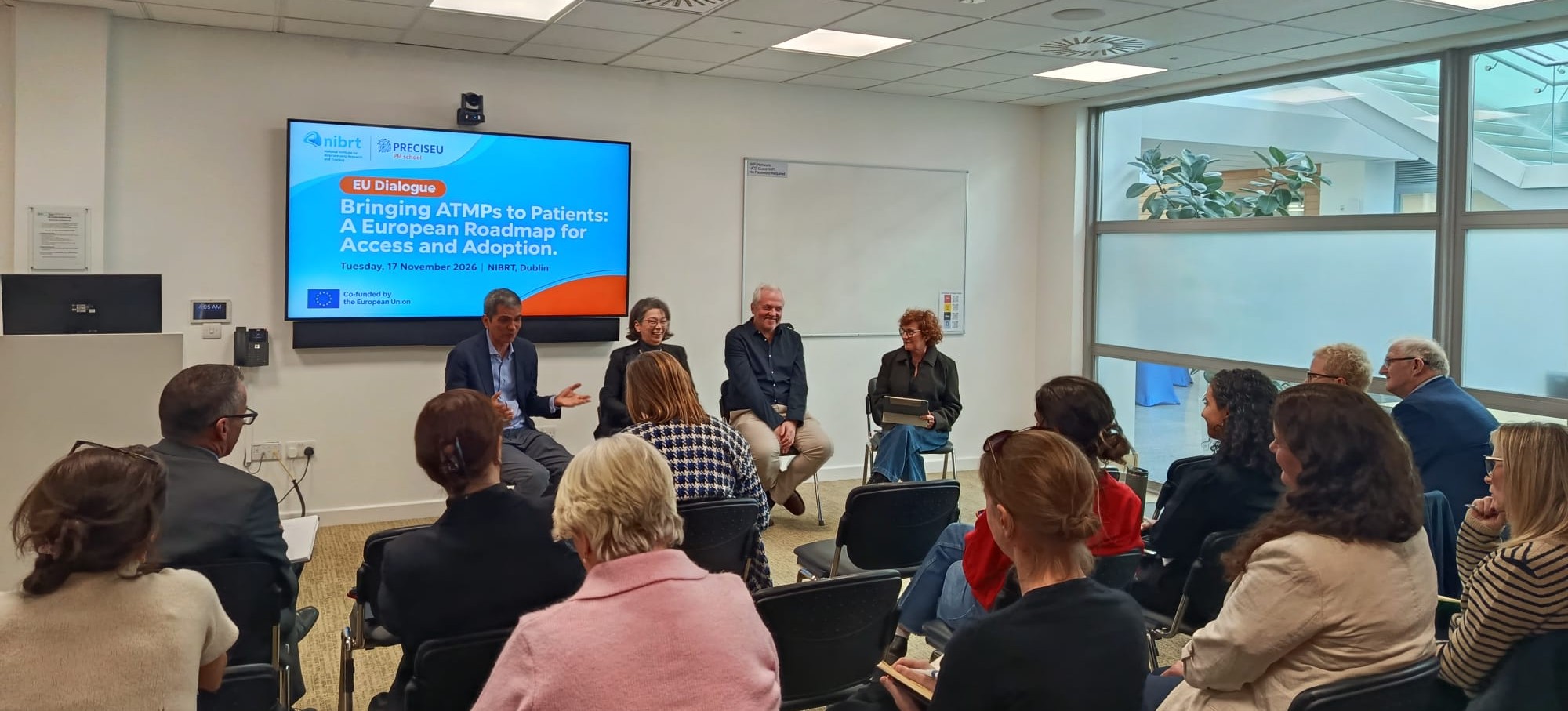
Cross-border clinical networks are essential for patient access
Patient access was another major focus. For rare diseases and highly personalised therapies, individual countries may not have sufficiently large patient populations or all the specialised expertise required for clinical development. European cooperation is therefore essential. Participants discussed the need for stronger cross-border clinical networks that allow expertise, trials and specialised treatments to be accessed beyond national borders.
Practical barriers remain, including patient mobility, differences between national healthcare systems, administrative procedures and access to information. These obstacles are not abstract. They can directly affect whether patients are able to access a clinical trial or specialised treatment in another European country. Reducing unnecessary administrative barriers while maintaining appropriate regulatory and safety requirements was identified as an important part of creating a more patient-centred European ATMP ecosystem.
Health data is a critical part of the equation
The discussion also underlined the importance of health data for the future of personalised medicine and advanced therapies. The European Health Data Space (EHDS) creates an important framework for improving access to and interoperability of health information across Europe. However, regulation alone will not make data usable. Participants highlighted persistent challenges related to fragmented hospital information systems, inconsistent clinical coding, data quality and limited resources dedicated to data management.
Initiatives including TEHDAS2 and Spain’s ÚNICAS initiative for rare diseases were discussed in the context of making health information more interoperable and usable across institutions and borders. Artificial intelligence was also recognised as an important opportunity, but one that depends fundamentally on access to reliable, structured and appropriately governed clinical data.
From European policy ambition to regional implementation
Many of the priorities emerging from the EU-dialogue are closely connected to PRECISEU’s ongoing work. As a Regional Innovation Valleys initiative for personalised medicine, PRECISEU connects regional innovation ecosystems with complementary capabilities in areas including advanced therapies, health data, capacity building and innovation adoption.
The project is already working on several of the practical challenges highlighted during the dialogue, including:
- mapping European ATMP capabilities to improve visibility and collaboration;
- strengthening interregional cooperation around advanced therapies;
- supporting health-data collaboration and readiness for the European Health Data Space;
- building skills and fostering cultural change through Personalised Medicine Schools and other capacity-building activities;
- connecting policymakers, regions and innovation stakeholders through European policy dialogue.
The discussion also highlighted opportunities for PRECISEU to deepen its cooperation with complementary European initiatives and to gather practical evidence about regulatory, clinical and cross-border barriers encountered during implementation. This type of evidence can help connect regional experience with future European policy development.
From fragmented excellence to coordinated delivery
Looking ahead, participants identified several priorities for the coming years: greater visibility of Europe’s ATMP capabilities, stronger clinical and manufacturing networks, more effective translational funding, improved interoperability of health data and fewer unnecessary barriers to cross-border patient access.
The message emerging from Dublin was that Europe already has many of the scientific, clinical and technological assets required to lead in advanced therapies. The next challenge is to connect them. Moving from fragmented excellence towards coordinated implementation will require collaboration across regions, healthcare systems, research infrastructures, industry and European institutions. For PRECISEU, this is precisely where regional innovation ecosystems can make a difference: connecting capabilities, testing new approaches and translating European ambitions into practical implementation that ultimately helps advanced therapies reach patients.
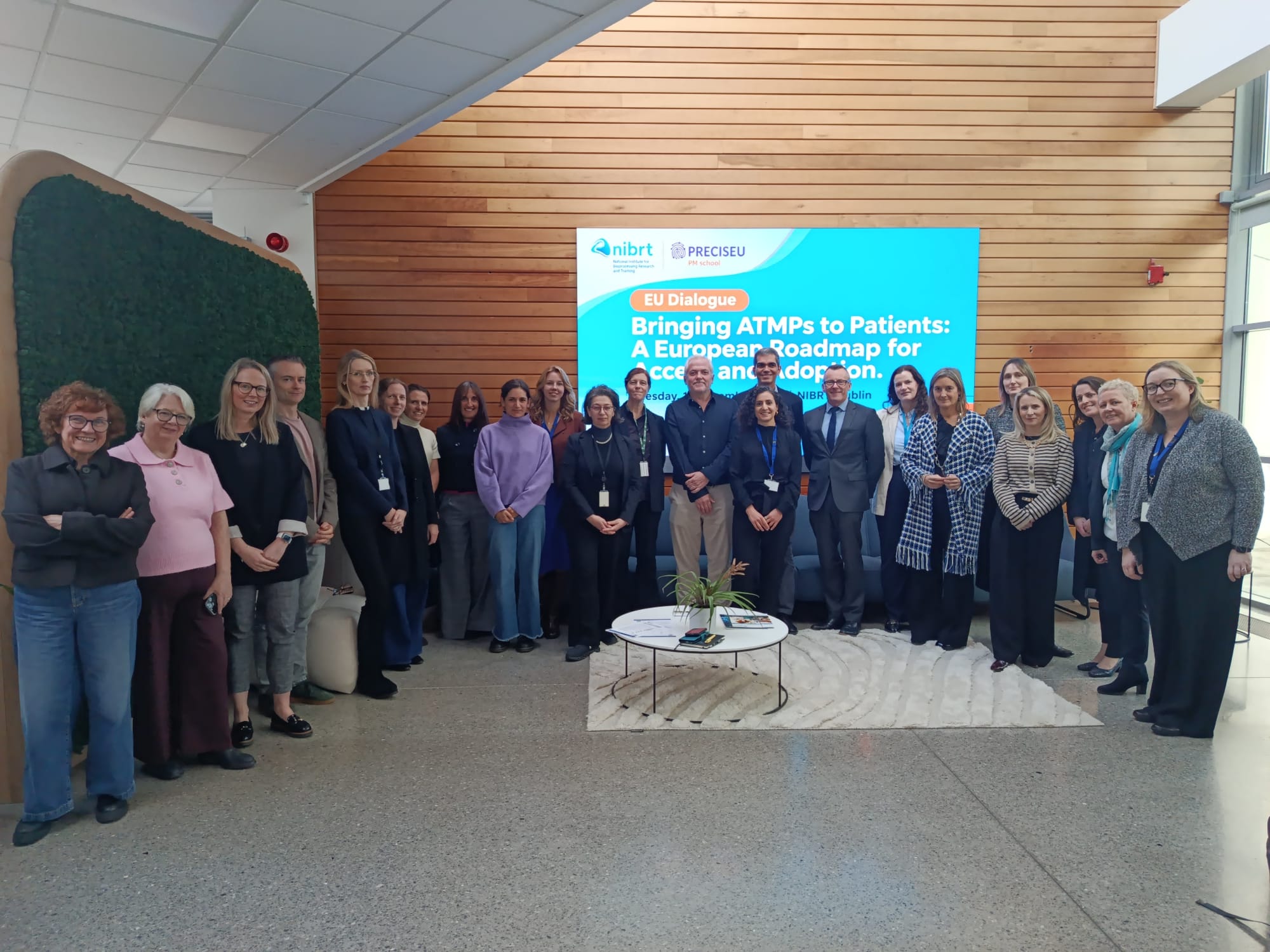
About PRECISEU
PRECISEU – Personalised Medicine Empowerment Connecting Innovation ecoSystems across Europe is a Horizon Europe project coordinated by Biocat that connects European regional innovation ecosystems to accelerate the development and adoption of personalised medicine. With a strong focus on Advanced Therapy Medicinal Products and Health Data, PRECISEU supports interregional innovation, capacity building, policy collaboration and the practical implementation of personalised medicine across European regions.
PRECISEU is co-funded by the European Union under Grant Agreement No. 101161301.