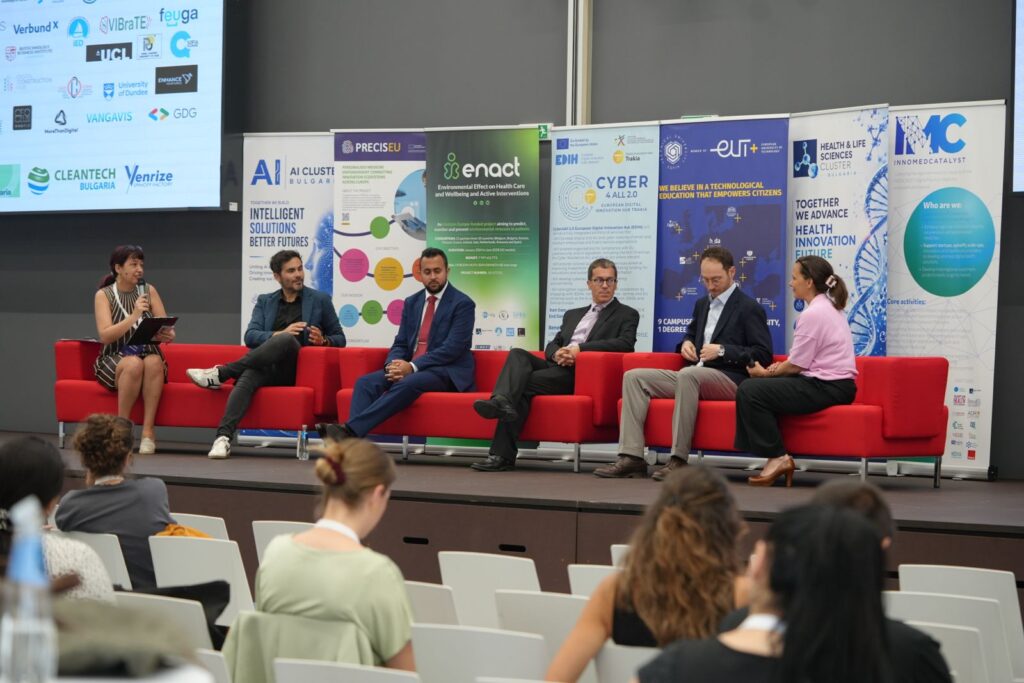
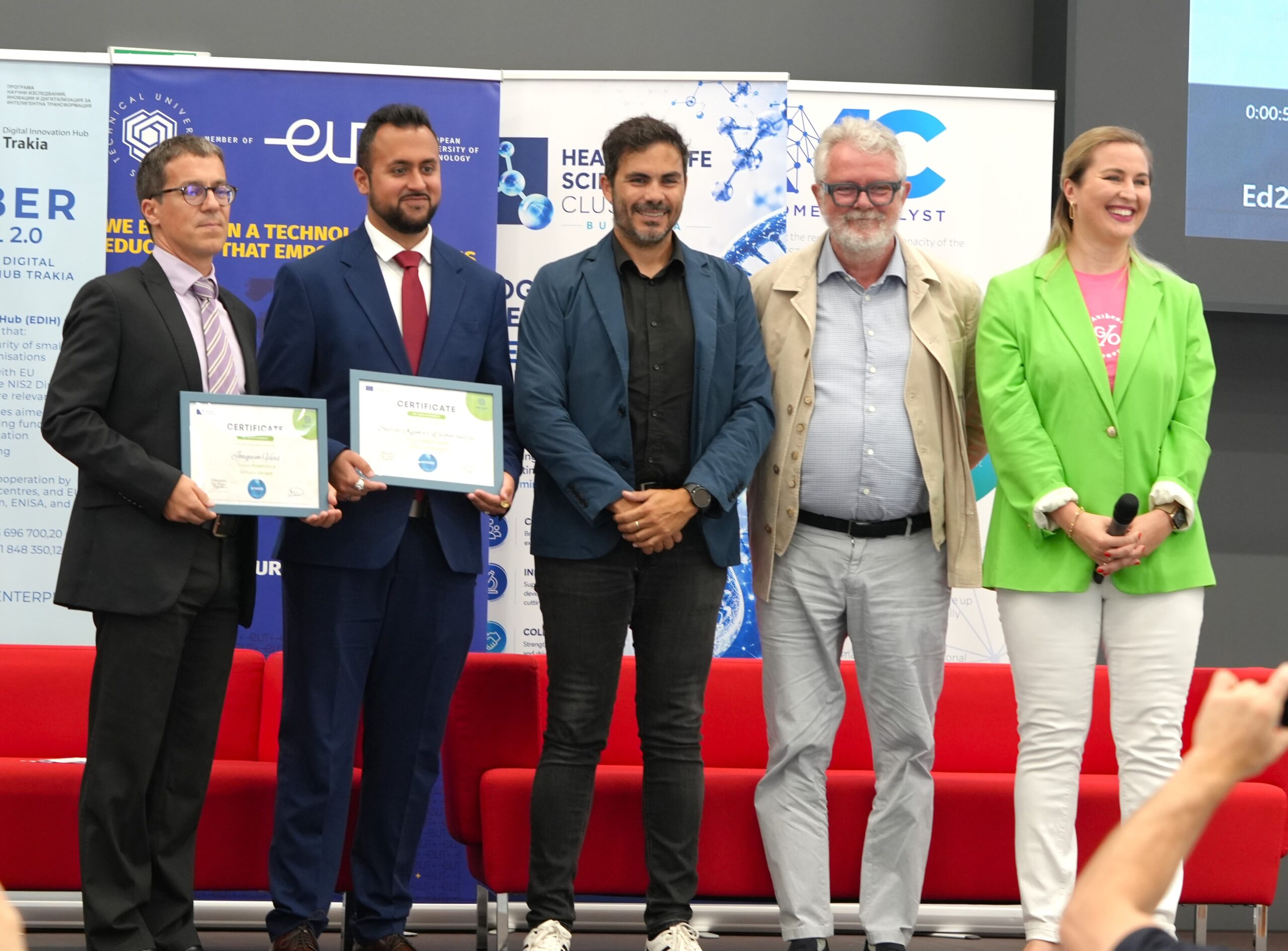
During the June 2026 Spinoff Europa Conference in Sofia, PRECISEU celebrated the Best Practice Recognition ceremony, highlighting teams and organisations that are already contributing to the implementation of personalised medicine across Europe.
The ceremony was more than a showcasing moment, it was a reminder that personalised medicine does not move forward through science alone. It also needs regulation that keeps pace with innovation, sustainable financing models, stronger coordination between countries and regions, support networks for companies and, above all, meaningful patient involvement from the outset.
The PRECISEU Best Practice Recognition is designed to identify and give visibility to outstanding projects and partnerships that help bridge the gap between research and clinical practice. By recognising innovative work, especially in advanced therapies, responsible health data use, patient engagement and real-world healthcare impact, PRECISEU aims to support a future where advanced healthcare solutions become more accessible, effective and fair for patients across Europe.
Four categories, four recognised initiatives
The recognition was presented across four categories: Impact, Innovation, Excellence and Culture.
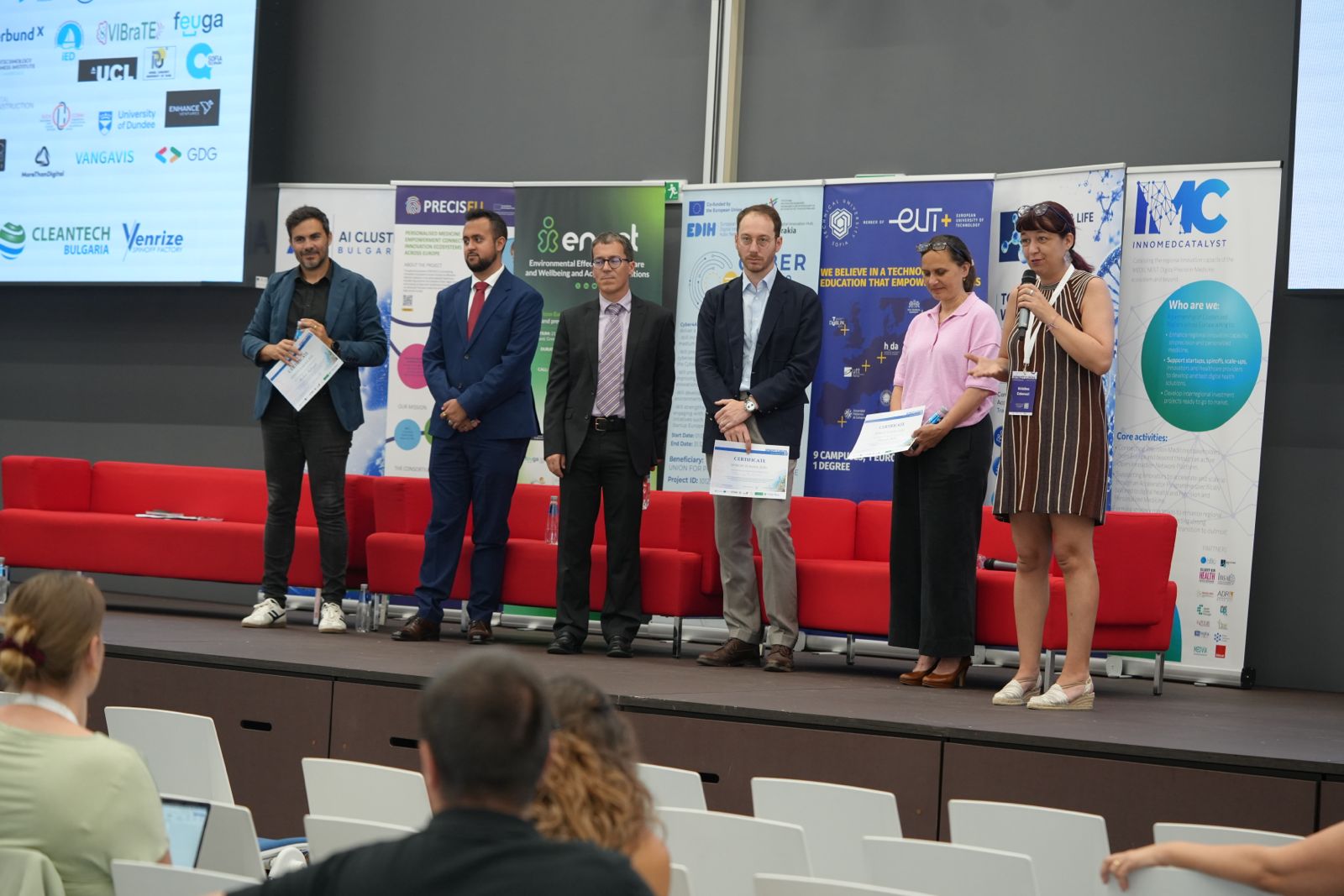
Impact: Altum TRACKseq
The Impact category celebrates initiatives that have led to significant and sustainable healthcare improvements. This year, the recognition went to Altum TRACKseq, developed by Altum Sequencing.
Altum TRACKseq focuses on improving cancer monitoring and supporting better clinical decision-making. In her statement, Marina Planas from Altum Sequencing underlined that innovation is not only about developing cutting-edge technology, but also about ensuring that these advances reach the people who need them most. The team’s aspiration is for technologies such as Altum TRACKseq to become accessible to cancer patients worldwide, supporting physicians and improving outcomes regardless of geography or healthcare system.
Innovation: Rinn Advanced Therapies
The Innovation category recognises implementations that are helping bring new therapies and technologies closer to patients. The award went to Rinn Advanced Therapies, a national centre in Ireland focused on personalised advanced cellular therapeutics.
The jury highlighted Rinn Advanced Therapies as a compelling and highly relevant initiative for building a national ecosystem for advanced cellular therapies. The project integrates patient, disease, product and biomanufacturing data in a vein-to-vein ecosystem designed to deliver personalised, quality-by-design cell therapies.
In the winner’s statement, Nicki Panoskaltsis emphasised that Rinn Advanced Therapies is the result of an intense collective effort and that the recognition belongs to the whole team. The initiative aims to deliver the right product to the right patient, at the right schedule and dose, at the right time — improving outcomes and reducing toxicity through true personalisation of therapy.
Excellence: MiMIAT Health
The Excellence category acknowledges leaders in health data use, privacy and ethical approaches to data-driven innovation. This year’s recognition went to MiMIAT Health.
MiMIAT Health was recognised for its differentiated approach to patient-centred health data architecture. The jury highlighted the project’s core concept of the patient as the data anchor across changing providers, as well as the clinical grounding of its gastrointestinal module.
This recognition reflects the importance of responsible and practical health data use in personalised medicine. Data is central to more precise, patient-tailored care, but it must be governed, structured and applied in ways that support trust, clinical relevance and real-world impact.
Culture: FLUENTCELLS
The Culture category recognises initiatives that promote patient engagement, public awareness and ethical innovation. This year, the award went to FLUENTCELLS.
FLUENTCELLS was recognised for its work in translational medicine, bioethics and patient-centric innovation. In his statement, Joaquim Vives, PhD, described the award as a recognition of a shared commitment to advancing patient-centred ethical innovation.
This category reflects an essential message for personalised medicine: innovation only matters if it is developed with people in mind. Patients are not passive recipients of new technologies. They must be involved in shaping how innovation is designed, communicated, implemented and made accessible.
What do the recognised initiatives have in common?
Although the four recognised initiatives work in different areas, they share several important characteristics.
They bring forward ideas with clear healthcare and market relevance. They are developed around patient needs, using a holistic perspective. They show strong potential for collaboration across Europe and for inspiring other regions and ecosystems. Most importantly, they demonstrate that personalised medicine implementation depends on the ability to connect science, healthcare, industry, policy and patients.
Through the Best Practice Recognition Awards, PRECISEU gives visibility to practical examples that can support knowledge transfer, reduce duplication and help successful approaches travel faster across regions.
The awarded teams show what is possible when innovation is not treated as an isolated achievement, but as part of a wider ecosystem effort. Their work helps Europe move from ambition to implementation, from fragmented excellence to shared learning and from promising solutions to better patient access.
Beyond their specific fields of work, these winners share a strong commitment to making a real difference. Their initiatives are not only technical or scientific achievements, but efforts to improve how innovation reaches people, how ecosystems collaborate and how Europe can become better prepared to deliver personalised medicine in practice. Each recognised team is contributing both to its own regional or national ecosystem and to the wider European effort to make advanced healthcare more accessible, connected and patient-centred.
Congratulations to all recognised teams! Their work sets important examples for the PRECISEU community and for Europe’s broader personalised medicine ecosystem.